
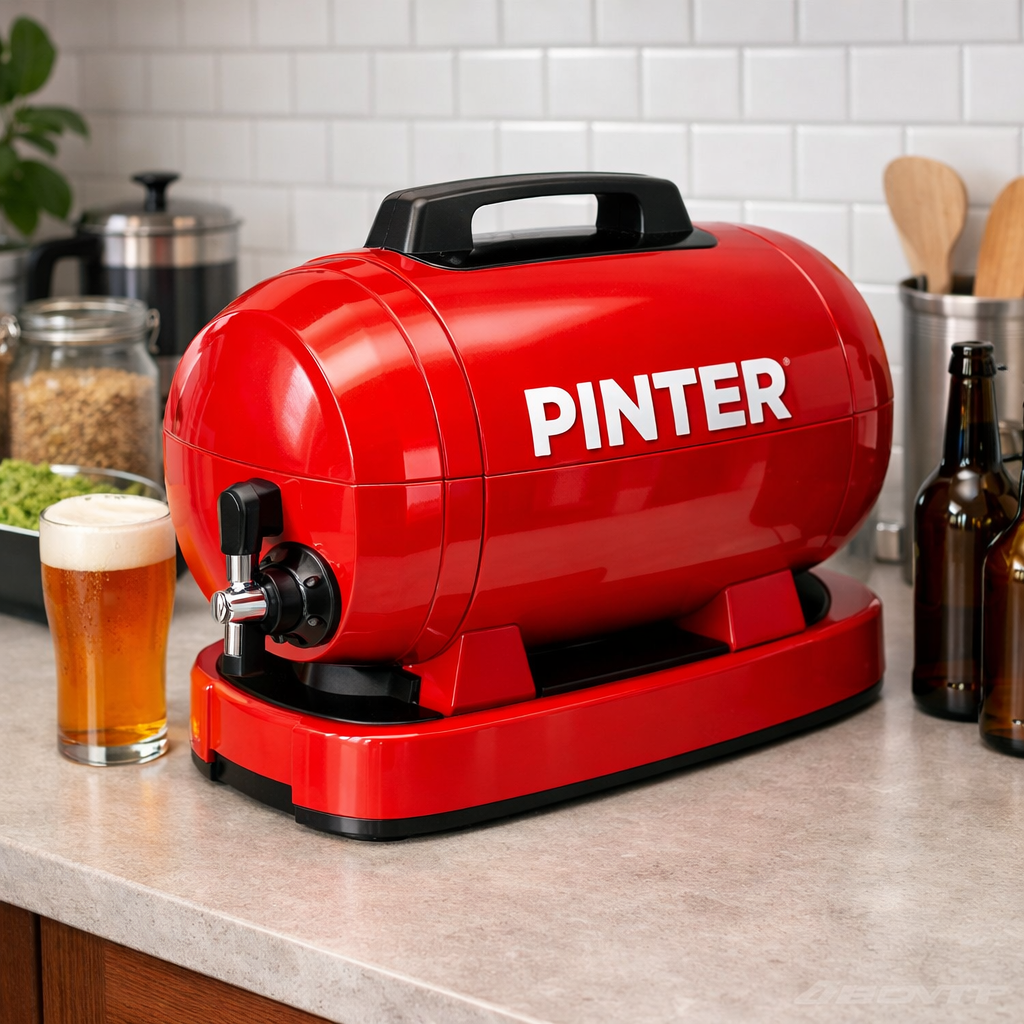
If you’ve brewed with a Pinter long enough, you know the honeymoon eventually ends. One day you’re pulling a perfect pour, the next you’re staring at a mysterious puddle on the counter wondering if your beer has staged a quiet escape. Recently, both of my Pinter Brewing devices decided to start leaking — because of course they did — and I figured it was worth documenting the troubleshooting journey for anyone else in the same sudsy boat.
The First Sign: The Dreaded Drip
It always starts small. A bead of liquid under the tap. A faint sticky ring on the base. You tell yourself it’s condensation. You lie to yourself. But once the drip becomes a trickle, it’s time to roll up your sleeves.
Common Culprits (and How I Tackled Them)
1. The Tap Seal
The tap assembly is the usual suspect. Over time, the silicone seal can warp, dry slightly, or just get grumpy.
My fix: I removed the tap, cleaned everything thoroughly, and gave the seal a light coat of food‑grade silicone grease. That alone stopped one of the leaks entirely.
2. The Front Door Not Fully Seated
If the front door isn’t locked in with a satisfying click, pressure can escape around the edges.
My fix: I reseated the door, pressed firmly around the perimeter, and made sure the latch was fully engaged. Simple, but surprisingly effective.
3. Over‑Carbonation
If the brew gets a little too excited during conditioning, pressure can push out through the weakest point.
My fix: I vented the Pinter gently, then chilled it down to calm the carbonation. The leak slowed immediately.
4. The Keg Seal (The Big One)
The main body seal can flatten over time, especially after many brews.
My fix: I inspected the gasket for nicks or compression marks. A quick clean and re‑grease helped, but I’m ordering a replacement set — these seals do eventually age out.
How Much Beer Does a Pinter Actually Make?
Since I was elbows‑deep in troubleshooting anyway, I revisited a question I get a lot: How much beer does a Pinter keg produce?
A standard Pinter brew yields about 10 pints, depending on the recipe and how much sediment you leave behind. It’s a sweet spot — enough to enjoy over a few days, not so much that it overstays its welcome.
Final Thoughts From the Leaky Front Lines
Brewing at home is equal parts science experiment and therapy session. A leak isn’t a failure — it’s a reminder that these little devices are doing real work under pressure. And honestly, once you’ve fixed a Pinter leak or two, you feel like you’ve earned your brewer’s badge.
If your Pinter has sprung a leak, don’t panic. Most issues come down to seals, seating, or carbonation. And if you’ve discovered a fix I didn’t mention, I’d love to hear it — Bill’s Beer Blog is all about swapping stories from the brewing trenches.
 Bill's Beer Blog